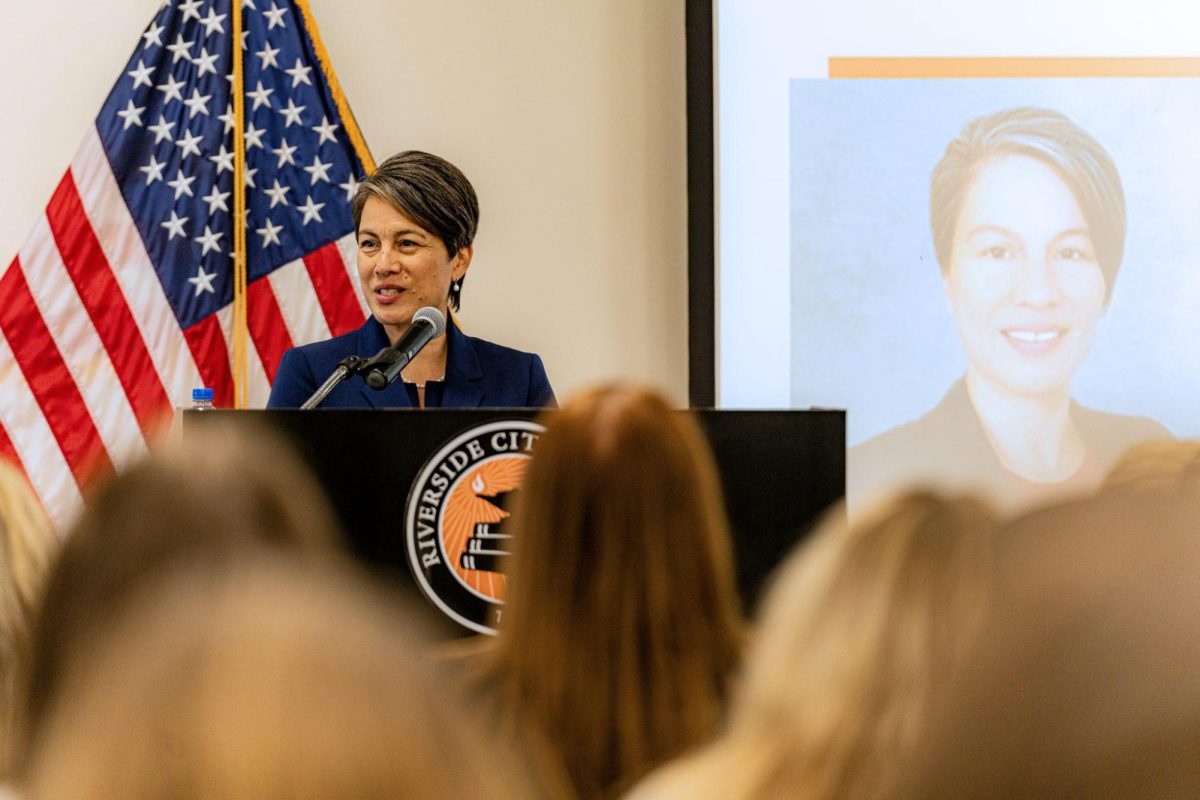
Several members of the Riverside Community College District Board of Trustees, during a Feb. 17 meeting, said they were frustrated with comments made by a federal official during a recent trip to Washington D.C.
“I was just disgusted,” Board President Jose Alcala said. “It was just appalling but again it never ceases to amaze.”
Board members traveled to the nation’s capital early February to attend the American Community College Trustees National Legislative Summit. At the event, the board members said U.S. Undersecretary of Education Nicholas Kent spoke to the audience about new accountability measures attached to federal financial aid grants and gave information about interagency agreements.
However, Trustee Bill Hedrick alluded that some of the undersecretary’s remarks were lacking professionalism. Trustee Keri Then added that Kent made comments targeting California and Minnesota for their “ghost student” problem, referring to fraudsters who sign up for community college classes to steal financial aid. Then said she witnessed the Minnesota representatives gasp and that his conduct to single out two states was disrespectful.
“It was incredibly unkind, it was in fact ruthless,” Then said. “What has happened in Minnesota recently and the grieving process that they are still going through was absolutely uncalled for and the comment and the smirk on that person’s face was absolutely uncalled for as a federal official.”
Trustee Hedrick also commented on the interagency agreements within the U.S. Department of Education to offload its responsibilities to other agencies that Kent mentioned in his speech.
The interagency agreements are a controversial topic as it follows the Trump administration’s orders to dismantle the education department.
The department has also not shared information as to what will happen to the programs it controls like financial aid and federal grants.
Kent, according to Trustees, said the department is offloading all of its functions to comply with President Trump’s orders.
“The piece that he shared was, ‘regardless, it’s all going to eventually fall back to the states,’ which is interesting,” Hedrick said. “The counterpoint to all of this was that they’ve obviously been sued numerous times [and] they have not done well in court.”