

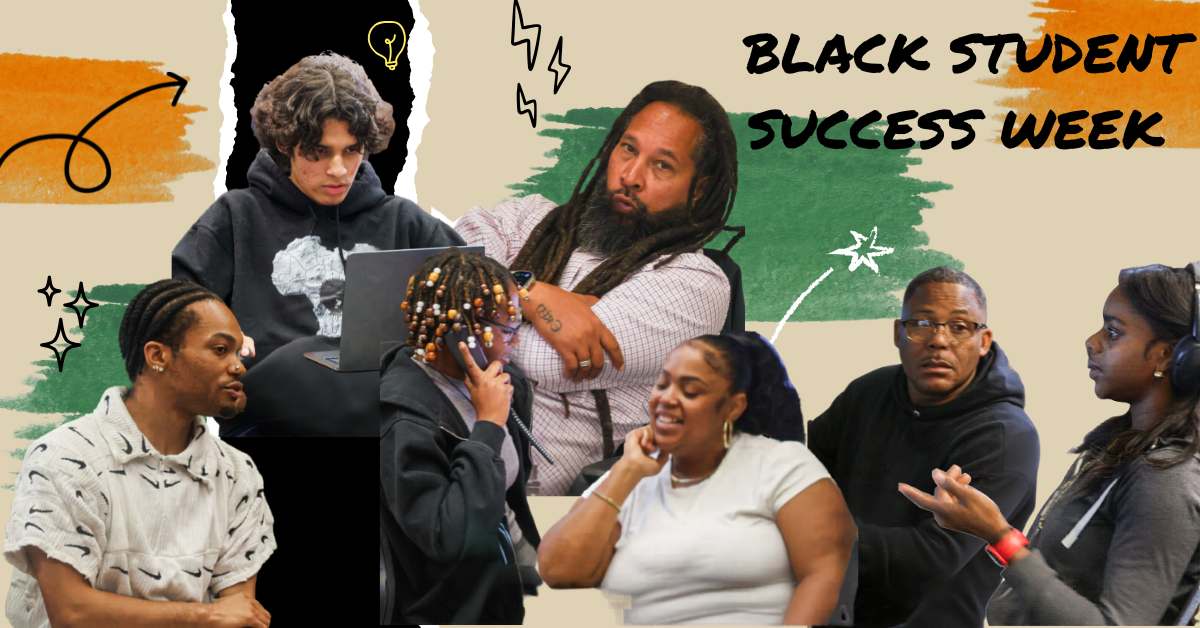
The Umoja project highlighted students’ efforts and community-building at Riverside City College from April 20-24 in recognition of the school’s 7th annual Black Student Success Week.
The statewide initiative showcased faculty members and students, as well as the education, community and change that have developed through the years in the name of Black success.
At RCC, Black Student Success Week took shape within the Umoja homeroom. Corey Timberlake, coordinator of the Umoja project at RCC, led the project’s dialogue on April 21, regarding the influence of modern technology.
“Success is an intentional effort by the institution to consider the resources and opportunities that are at the disposal of the students,” Timberlake said.
For members of the project, Umoja has become a resource for Black students on campus to join others in creating opportunities and building relationships.
“Opportunities here are transformative, not transactional,” said Timberlake. “Moments where students feel unwelcome or unvalued become moments of redevelopment.”
Within the project, students have developed into the very roles that guided them when they first entered the program.
“Success looks like creating opportunity and giving people space and tools for them to succeed,” said Joshua Carney, a cabinet member of the Umoja program. “We help the younger people and guide them.”
Carney believes the driving force behind the week remains constant, despite Black Student Success Week being a time to recognize the efforts and victories of Black-organized programs.
“One week is not enough. Black history month and holidays show black students. Umoja creates a space for students to show up and make themselves known,” said Carney.
According to cabinet member and president of Umoja, LaNiyah Wilson, black student success week is a cumulative time for Black-led programs to connect and create a dialogue around the prosperity of black students.
“This is for black students finding a way in life,” said Wilson. “Showing some of the opportunities for students is important.”
According to Wilson, Umoja students and faculty rely on one another to create an environment that spawn’s success. Making a safe space for students to ask questions, engage in dialogue, and access resources is vital to the success of not only students, but the Umoja program as a whole.
“Success to me looks like freedom and the ability to pursue success,” Wilson said.


