Digesting the word “B.L.A.C.K.”
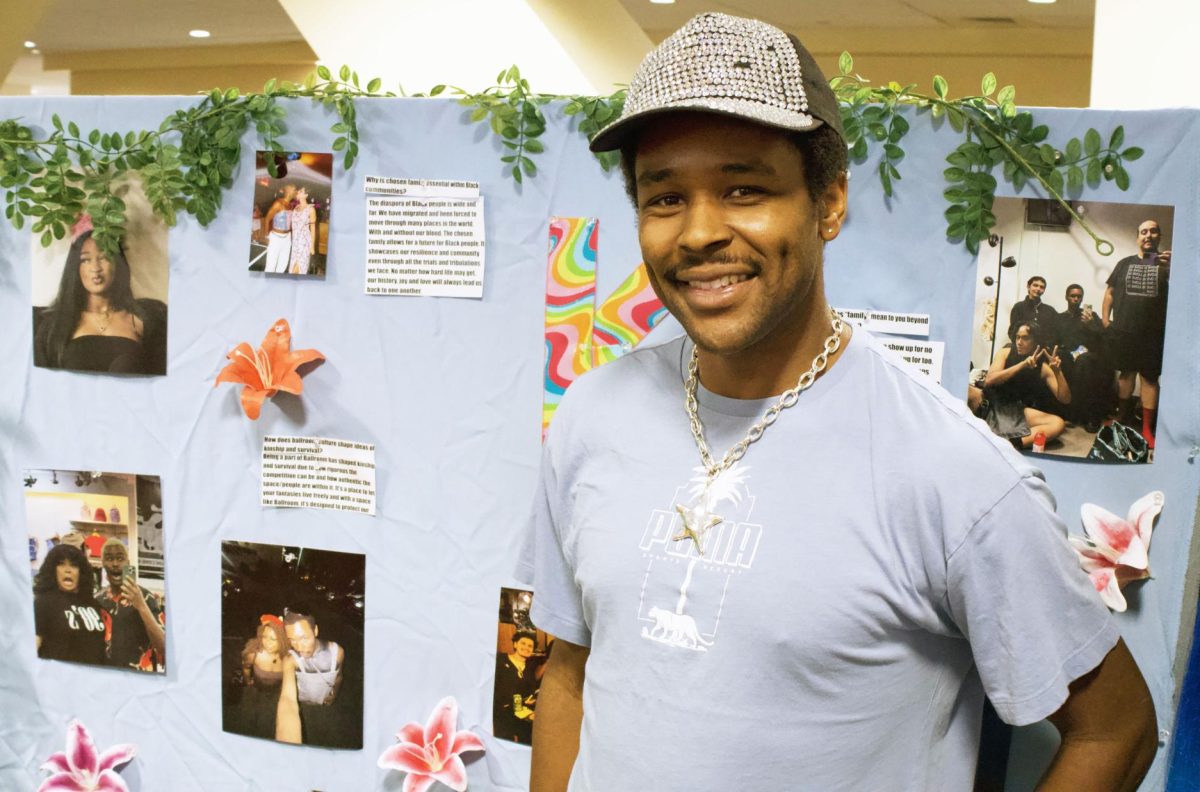
Sabree Gilkes, a 26-year-old RCC student, digested the word in an exhibit to showcase their personal meaning.
Gilkes also wanted to illustrate the rich history of African American icons from around the world, as well as tell the stories of the trailblazers who actively pave paths in the community today.
The exhibit emerged partially due to a new library faculty member, Blanca Garcia Barron. She felt there was a lack of creative representation on campus. Barron took note of Gilke’s interest and encouraged them to create an exhibit at the library.
Each letter in the word “B.L.A.C.K.” had its own meaning in reflection of the exhibit, according to Gilkes.
“It’s an acronym that stands for brilliance, language, archive, culture and kin,” Gilkes said.
The “B” stood for brilliance and represented the figures within the Black community who shine light on culture and uplift those around them. While noteworthy names are seen throughout the exhibit, Gilkes makes a point of illuminating the friends and local figures who help create modern culture.
The “L” stood for language that is connected to the African American Vernacular English (AAVE), the dialect spoken primarily by African Americans as a result of the importance of slavery. The exhibit recognizes how AAVE has been exploited and popularized through pop culture.
“Language has become gentrified and commercialized,” they said. Gilkes aims to preserve the cultural significance of AAVE while acknowledging its origin.
“A” stood for archive. This portion of the exhibit featured historical images of African Americans as well as personal photos. They felt that it was important to document personal journeys.
“It’s important to me that I archive the Black experience,” Gilkes said.
While many mediums were used within Gilkes artwork, photos and documentation were crucial to Gilkes’ expression.
The “C” stood for the culture portion of the exhibit. Gilkes felt that a space was needed to be able to recognize early Black media, and dove deeper into modern activists who create spaces for expression. Gilkes recognized a pattern among early black media, which is the repetition in black and white photography. To encourage a new generation of activists, Gilkes chose to showcase both icons and friends colorfully.
Lastly, “K” stood for “kin,” an exhibit segment about both family and friends within the community. This is Gilkes’ personal favorite because they believe that unity is important in a community.
“I have a real family and [a] chosen family,” Gilkes said. “When I’m with these people, I never feel shame.”
Alongside the importance of words, Gilkes uses bold colors to connect the personal meaning of Black to the queer community.
“Color guides me,” they said. “It’s important to see ourselves in color.”
A portion within the exhibit encouraged contributors to write quotes explaining their outlooks on culture. Contributor of the exhibit, Isaura Armedariz Martinez, wrote the quote, “The core of humanity is empathy, our empathy is exactly what ties us together.”
Gilkes said that they continue to fight for queer and Black representation. They said they remain resilient within their mission to amplify voices.